24/7 Emergency Service
Family Owned & Operated


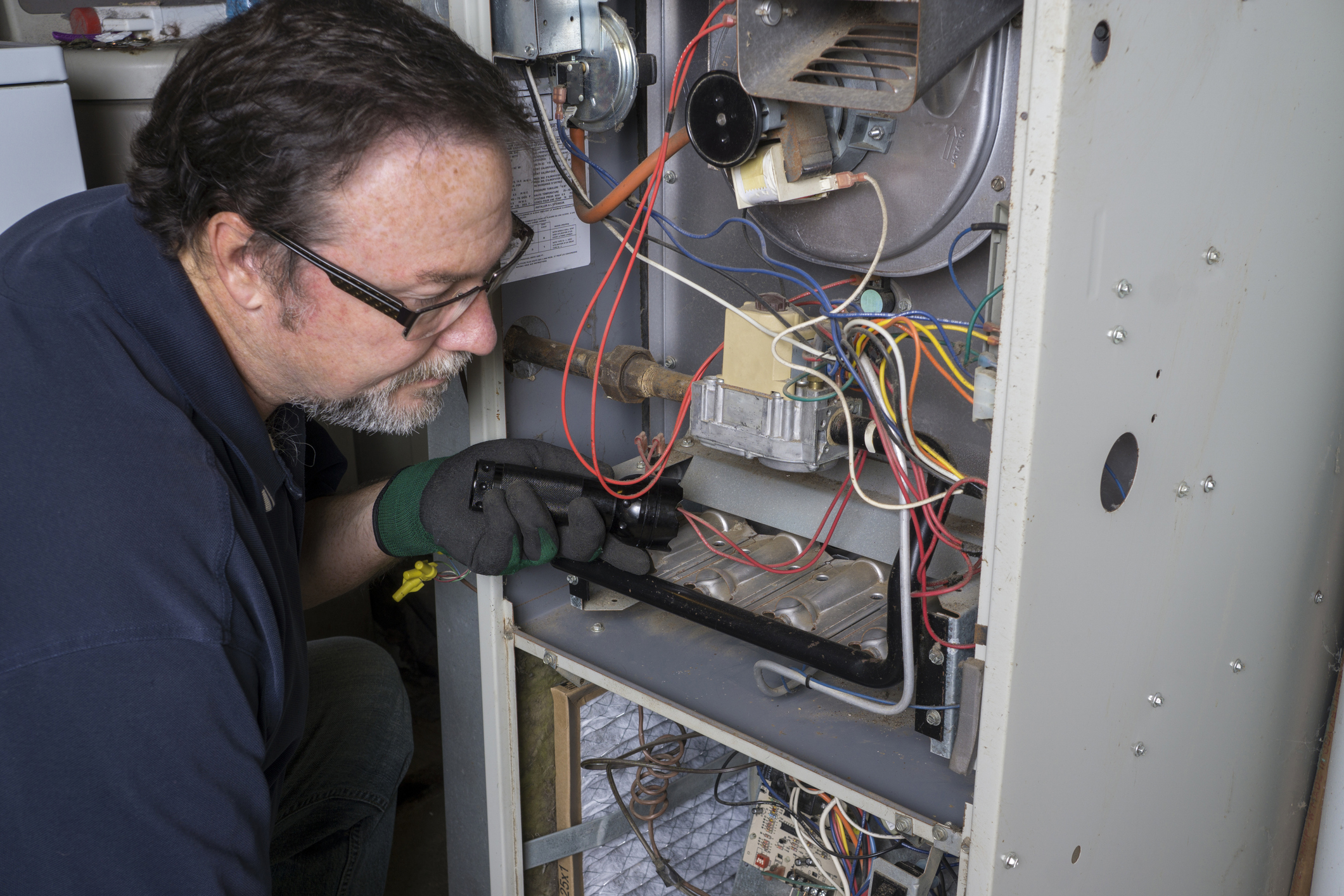
A failing furnace disrupts comfort and can hint at safety or efficiency issues that deserve quick attention. This practical guide for homeowners in Manheim, PA walks you through the most common furnace problems, why they happen, and simple checks you can try before calling a pro. You’ll learn what thermostat settings, ignition parts, airflow restrictions, and electrical or gas faults typically look like, how to triage short cycling, why odd noises are worth checking, and how filters and thermostat faults slowly degrade performance. Each section separates safe DIY steps from repairs that need a licensed technician and gives clear next steps so you can make confident decisions. Follow the headings below for root causes, step-by-step diagnostics, and local service considerations tailored to the Manheim area.
If your furnace runs but your home stays cool, the issue usually lives in one of a few subsystems — controls (thermostat), ignition/pilot, airflow (filter or vents), or the electrical/gas supply. Pinpointing which part is failing helps you do quick diagnostics, avoid unnecessary parts swaps, and keep things safe. Below are easy staging checks and a compact comparison to help you prioritize what to look at and when to call for professional help.
Knowing the typical causes and fixes for common furnace failures makes troubleshooting faster and safer.
The table below matches common components to typical symptoms and quick, safe DIY checks you can perform.
Work through these basics to rule out simple causes before digging into component-level troubleshooting. If these checks don’t restore warm airflow, read on — the next sections dig deeper into thermostat and ignition issues and what to expect from a professional inspection.
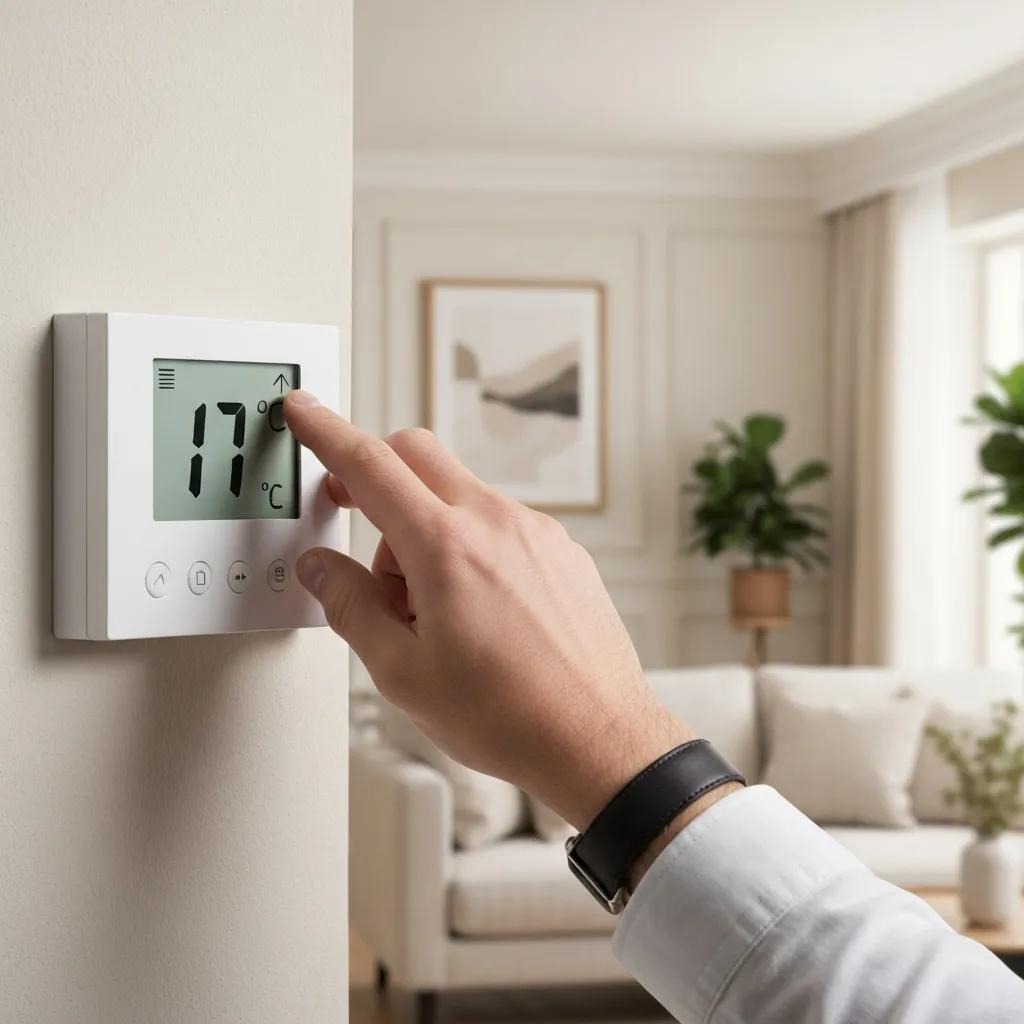
Thermostat issues are a common, often simple cause of a furnace running without producing heat. The thermostat senses room temperature and sends the heat call; misconpd settings, dead batteries, or wiring faults can prevent that signal. Start with the basics: confirm the thermostat is in "Heat" mode, bump the setpoint to force a call for heat, replace alkaline batteries if the screen looks dim, and reboot smart thermostats through their app or by power-cycling at the breaker. If the thermostat is old, shows intermittent power, or has damaged wiring, that points to a wiring or control-board problem that’s best handled by a technician with HVAC test equipment.
Smart thermostats can sometimes reveal faults or odd behavior before you see symptoms in the home.
Always troubleshoot thermostats carefully — a faulty thermostat can mimic more serious system failures. If replacing batteries and resetting the unit don’t produce a steady heat call, or if wiring looks frayed, it’s time to call a pro to avoid wasted repairs. Next we explain how pilot lights and modern igniters affect whether the furnace will produce flame and heat.
If the furnace won’t light, combustion isn’t happening — no combustion, no heat. Older units with pilot lights and modern systems with electronic igniters both rely on functioning ignition components. A dirty flame sensor, a failing thermocouple, or a weak igniter will cause the control board to shut off fuel for safety, so the furnace will cycle but not heat. Watch for clicking noises, repeated ignition attempts, or no visible flame; if you detect a gas smell, evacuate and call emergency services rather than attempting repairs. Safe checks are limited to visual confirmation of the pilot or noting igniter behavior during a heat call — don’t try gas-valve or internal ignition repairs yourself.
When ignition parts repeatedly fail or the unit won’t stay lit, a certified technician should test the flame sensor, thermocouple, igniter, and gas valve. Professional service restores safe, reliable combustion and consistent heating.
To schedule service or learn more in Manheim, PA, call us or use our online form to request service.
Short cycling — the furnace switching on and off rapidly — hurts efficiency, increases wear, and can shorten component life. It happens when the system hits a control threshold too quickly or a safety device interrupts operation repeatedly. Common causes are restricted airflow (so the heat exchanger overheats), thermostat placement or calibration issues, or failing components like flame sensors or control boards. A good triage separates easy fixes from problems that need a technician. Start with airflow and thermostat checks, then time the cycles to decide whether to call for help.
Use this quick list to try immediate DIY fixes and learn what each step rules out.
These steps often stop short cycling caused by airflow or control settings. If the problem persists, the sections below explain common root causes and when to bring in a technician.
Short cycling most often comes from restricted airflow, thermostat errors, oversized equipment, or flame-sensing and control failures. Dirty filters or closed vents let the heat exchanger heat up quickly and trip safety limits. A thermostat in the wrong spot or miscalibrated can shut the system off early. An oversized furnace can heat a space too fast and cycle frequently. Faulty flame sensors or control boards can also interrupt normal operation. Try replacing the filter and relocating the thermostat, then time the on/off cycles — if they’re consistently well under five minutes, you’ll likely need a technician to measure static pressure, check thermostat calibration, or test electronic controls.
Finding the true cause saves you from swapping parts unnecessarily and helps decide whether repair, adjustment, or replacement is the right move.
Call a technician if short cycling continues after the basic DIY checks, if cycles are under five minutes regularly, or if you notice safety signs like burning smells or repeated error codes. A pro will measure airflow and static pressure, test flame sensors and control-board behavior, inspect duct sizing, and verify thermostat function. If worn capacitors, failing blower motors, or control-board faults are found, professional repair or replacement will stop the damaging cycles and restore reliable operation. Quick intervention prevents higher energy bills and larger failures down the road.
An experienced technician can also advise whether a repair will be long-lasting or if a phased maintenance plan makes more sense for your home and budget.
To arrange a service visit or ask about options in Manheim, PA, you can contact us online or call our team.
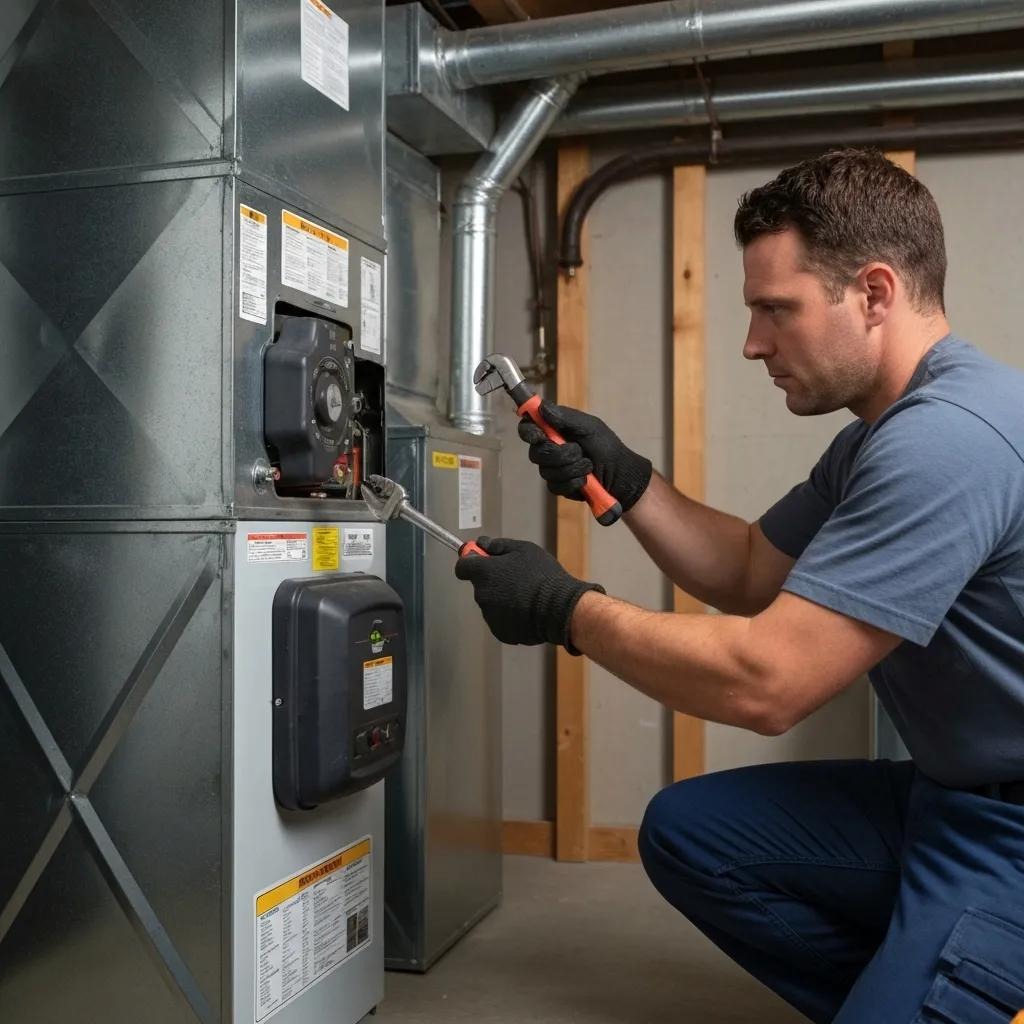
Furnace noises are diagnostic — different sounds usually point to specific mechanical issues like delayed ignition, worn bearings, or an unbalanced blower. Identifying the noise and when it happens helps you decide whether it’s safe to wait or if the system should be shut off and serviced.
First steps: listen to where the sound is coming from, turn the system off if you smell burning or see smoke, and note whether the noise occurs at startup, while running, or at shutdown. The table below maps noise types to likely causes and recommended actions to help you triage quickly. Check our services.
This guide helps you determine whether a noise is safe to monitor or requires immediate shutdown and a service call.
Blower motors and fans make noise when bearings wear, belts slip or fray, the wheel becomes unbalanced, or debris hits the blades. Worn bearings often produce a high-pitched squeal before motor seizure; belt problems give rhythmic squeaks and reduced airflow; unbalanced wheels cause vibration and rattling that worsen over time. You can do simple visual checks — look for cracked belts or foreign objects — but replacing bearings or balancing the blower requires disassembly and tools, so call a professional. Typical repairs include motor replacement, bearing lubrication, or blower-wheel realignment to restore quiet, efficient airflow.
Addressing blower noise quickly protects airflow and prevents secondary damage like capacitor failure or tripped breakers from excessive current draw.
Noises give useful clues to prioritize repairs without tearing the unit apart. Banging or loud pops at startup usually signal delayed ignition and can stress the heat exchanger — that needs prompt attention. Squealing often points to worn motor bearings or belt issues; grinding typically means motor damage and calls for immediate shutdown. A single click can be normal during ignition, but repeated clicking with no flame usually indicates ignition trouble that needs a technician. If you hear metallic clanging, burning smells, or anything accompanied by smoke, shut the unit off and call for service right away.
Treat noise types as triage signals: take action sooner for sounds that suggest combustion or motor failure to avoid safety issues or costly repairs.
Thermostats control when the furnace runs — so when they misreport temperature or fail to send proper signals, the furnace can go cold, short cycle, or overwork. Thermostats range from basic dials to programmable and smart units, each with different failure modes: dead batteries or display faults on simple units; scheduling or programming errors on programmable models; and Wi‑Fi or app issues with smart thermostats. Because the thermostat is the system’s command center, accurate operation is essential for comfort and efficiency. Below are practical troubleshooting steps and replacement indicators.
If problems persist after these checks, the following sections explain when replacement makes sense and what benefits it brings.
Start by confirming the thermostat is set to "Heat" and the temperature setpoint is higher than the current room temperature so the furnace receives a heat call. Even if the display looks fine, replace batteries — low power can cause intermittent behavior before full failure. For smart thermostats, verify Wi‑Fi and app status and reboot the device to clear software glitches. If the thermostat should have a common (C) wire and it’s missing or degraded, you may need pro wiring or a power adapter to stop repeated resets and stabilize performance.
If these steps don’t fix things, a technician can measure voltage at the thermostat, check compatibility with your furnace control board, and recommend wiring fixes or a replacement that matches your system.
Replace the thermostat when problems persist after battery changes and resets, when the device doesn’t support your furnace’s control needs, or when outdated features prevent efficient scheduling or zoning. Signs include a dead or flickering display, erratic on/off behavior despite correct wiring, or lack of programmability or smart features that would improve control. Upgrading to a programmable or smart thermostat can reduce runtime, lower energy use, and provide diagnostics that help technicians find future issues faster. When you replace a thermostat, confirm the new unit supports your furnace type and control signals to avoid compatibility problems.
A correctly matched thermostat improves comfort, efficiency, and troubleshooting down the road.
Dirty filters and restricted airflow reduce heat transfer, drop system efficiency, and can trip overheating protections that limit or stop the furnace. When intake is restricted, return-air and heat-exchanger temperatures rise and limit switches shut burners down to prevent damage — that reduces delivered heat and often leads to short cycling. This stresses the blower motor and heat exchanger and raises energy use. The table below shows common filter types, how they affect performance, and recommended replacement frequency to avoid problems.
Knowing your filter type and replacement rhythm helps balance air quality, efficiency, and system longevity.
A clogged filter reduces return airflow, which prevents the furnace from exchanging heat efficiently and lets the unit run hotter internally while delivering less warm air to rooms. The result is reduced heat distribution, frequent trips of the high-limit safety switch, and greater stress on the heat exchanger. The blower motor also works harder, increasing energy draw and wear on bearings and capacitors. Regular inspection and timely filter replacement restore proper airflow, normalize temperatures, and prevent safety trips that interrupt heating.
Keeping filters on a schedule is a low-cost way to protect major components and keep your home comfortable.
Replacement frequency depends on filter type and household conditions like pets, smokers, or high dust. As a rule: check 1" disposable filters monthly; inspect pleated filters every 2–3 months; and check high-efficiency media filters about every 3 months. Homes with pets or high dust loads should shorten intervals and consider higher-capacity filters if the HVAC system supports them. Always inspect the filter visually — a gray, clogged surface means replace it even if your schedule hasn’t arrived. The right cadence balances filtration with safe static pressure and efficient furnace operation.
Regular checks are the simplest prevention against overheating, short cycling, and premature component wear from restricted airflow.
Call an HVAC technician right away for safety-critical signs: a strong gas odor, a carbon monoxide alarm, visible smoke, or flame rollout — these require evacuation and emergency response. For serious but non-emergency issues like a cracked heat exchanger, major electrical or control-board failures, persistent short cycling, or repeated ignition failures, contact a certified technician who can run proper diagnostics and make safe repairs. Before the visit, note any error codes, describe the symptoms and timing, and list recent maintenance — that helps the technician diagnose faster and reduces repair time. Local teams serving Manheim, Lititz, and Lancaster offer both emergency and scheduled service to handle safety and comfort priorities.
Real-time modeling and diagnostics offer a structured way to spot furnace anomalies and inform troubleshooting. If you need local help, Evergreen Heating & Cooling is family-owned, available 24/7 for emergencies, and serves Manheim, Lititz, and Lancaster with experienced technicians you can trust. To schedule service or learn more about options in Manheim, PA, call or request information online.
Seek immediate help if you smell gas, hear hissing with an odor, see smoke or flame rollout, or if a carbon monoxide alarm sounds — these are emergencies. Evacuate the home, call emergency responders, and contact qualified HVAC emergency services. Technicians must address gas valves, heat exchangers, and combustion-chamber problems because those repairs involve combustion safety, code compliance, and CO risk. Don’t attempt DIY fixes for gas-related issues; instead, shut off the gas if it’s safe, leave the house, and get professionals involved. Quick action prevents catastrophic outcomes and uncovers hidden damage that could produce dangerous byproducts.
A technician will also test for carbon monoxide and inspect the heat exchanger and venting to confirm safe combustion and exhaust paths.
Complex repairs that require trained technicians include replacing a cracked heat exchanger, swapping gas valves or control boards, major blower-motor work, and ductwork changes that affect system balance and safety. These jobs need specialized tools, combustion testing, and compliance with local code. Technicians perform pressure tests, CO measurements, combustion-efficiency checks, and electrical safety verifications before and after repairs. Choosing a qualified pro ensures the work is correct, keeps warranties intact when applicable, and restores safe, efficient heat.
Following these steps helps homeowners in Manheim get fast, effective furnace repair while keeping safety and long-term performance top of mind.


Enjoy flexible financing options that make upgrading or repairing your HVAC system easy and budget-friendly.